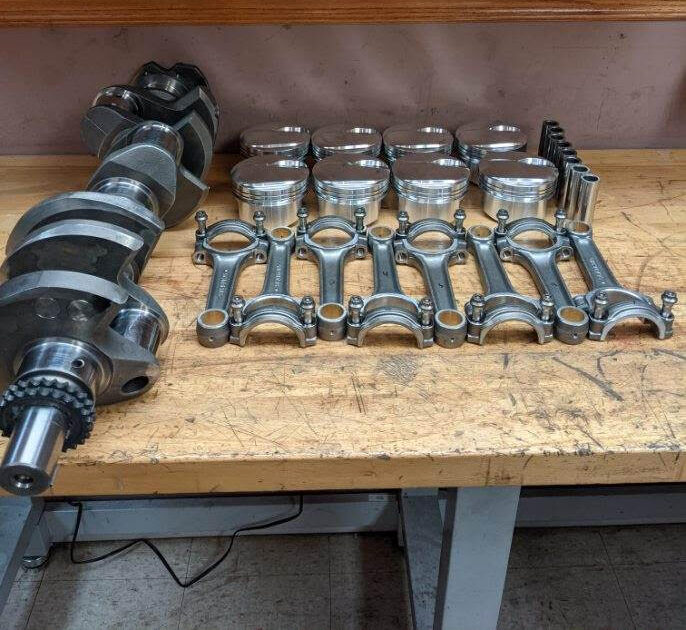
As horsepower is increased in any internal combustion engine, the need for more durable parts is required. The rotating assembly, which is comprised of the crankshaft, connecting rods, and pistons is typically upgraded to withstand higher operating speeds and greater force that’s applied from increased cylinder pressure.
While many stock cranks, rods and pistons will work fine into the 500-600 horsepower range, beyond that you should consider aftermarket parts. Thankfully, you’ll find an endless list of these components in a wide price point range. Designs and materials can vary wildly, so a quick education is in order.
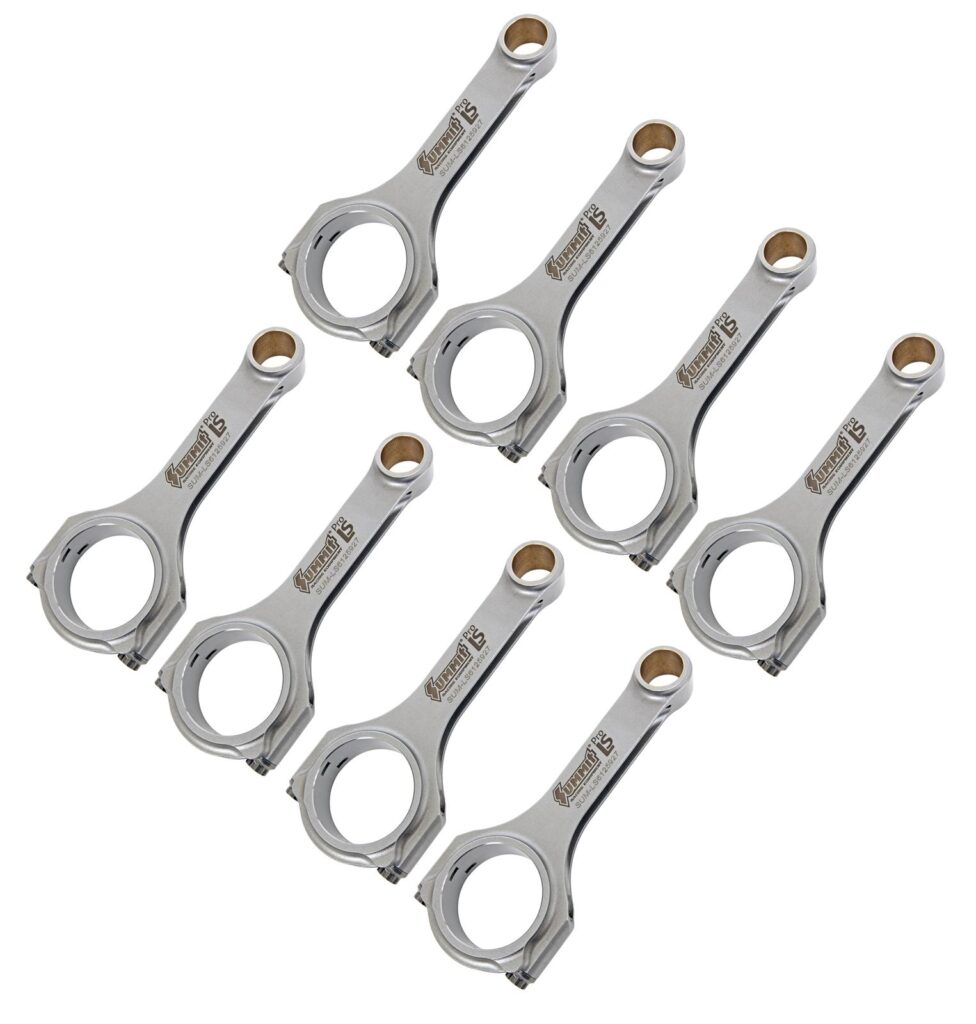
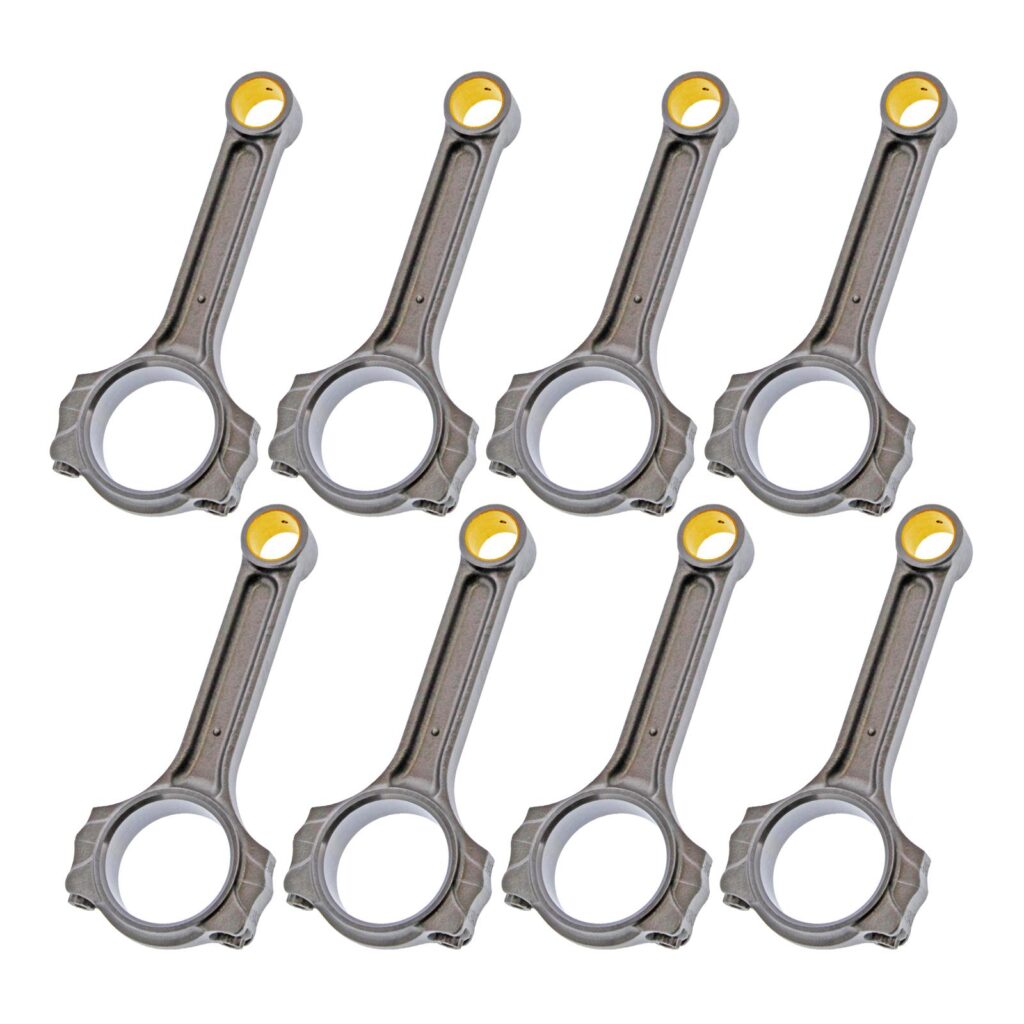
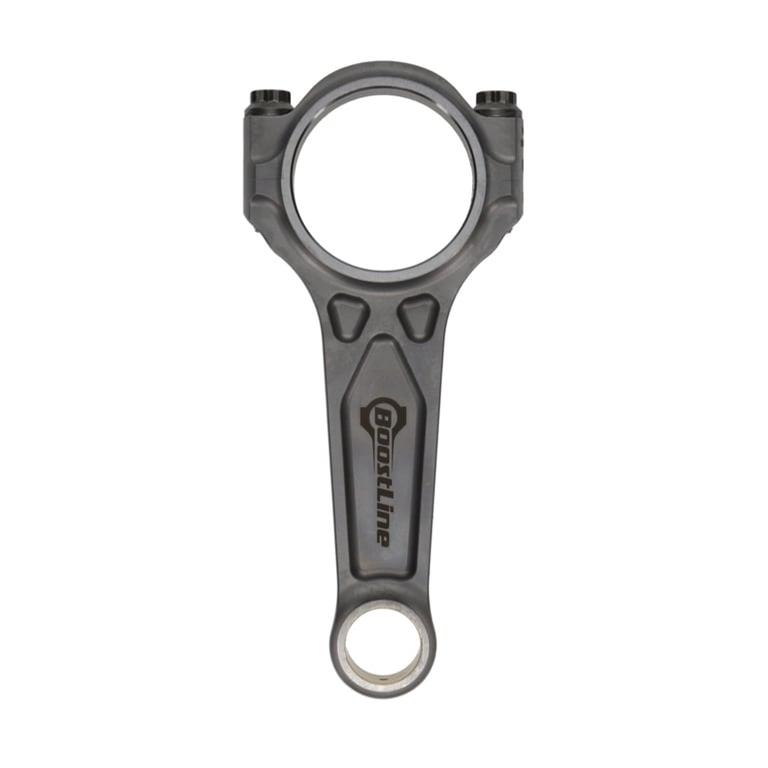
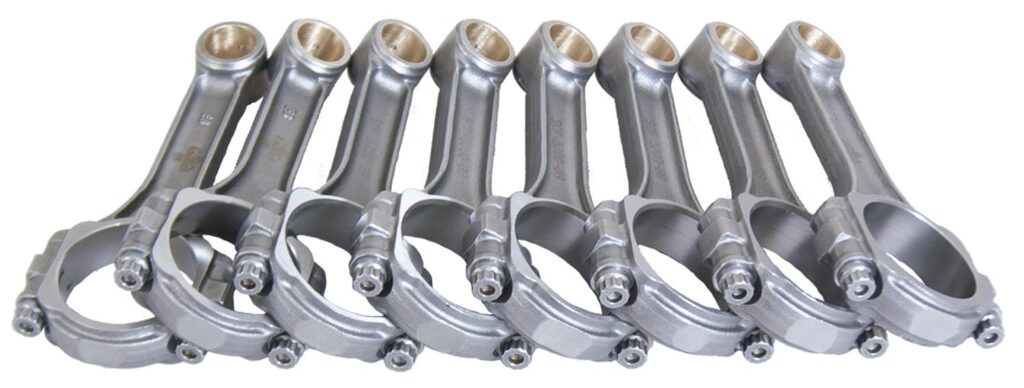
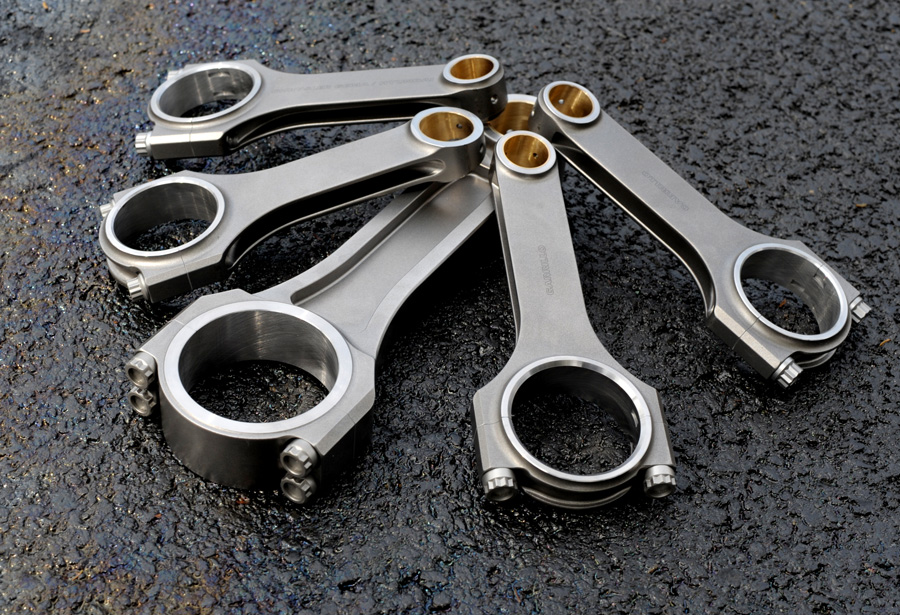
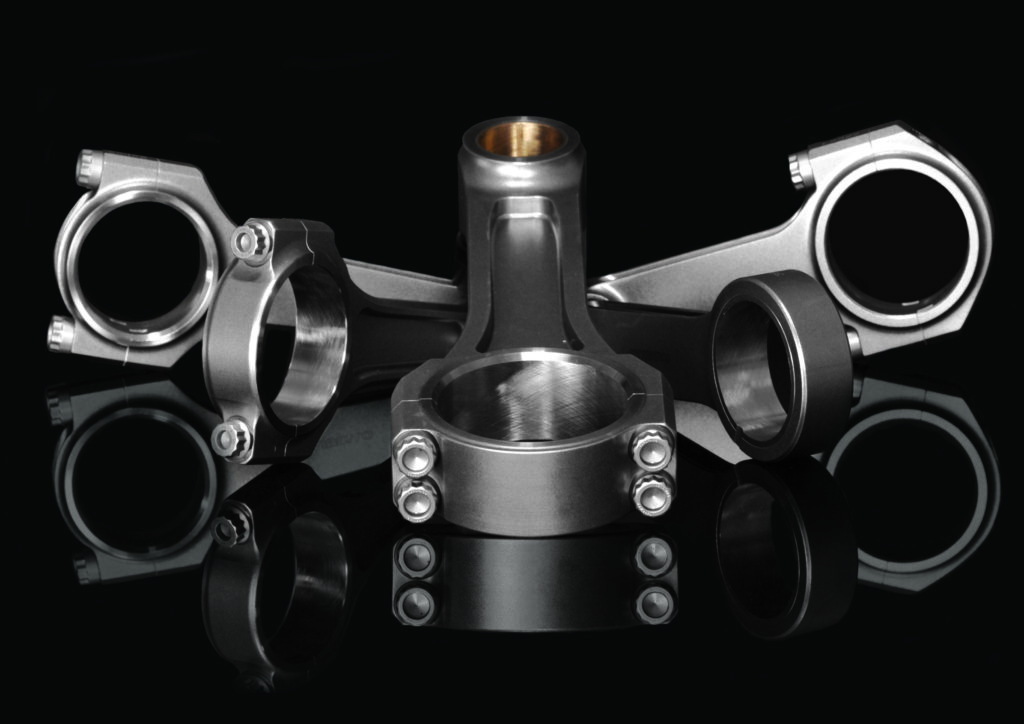
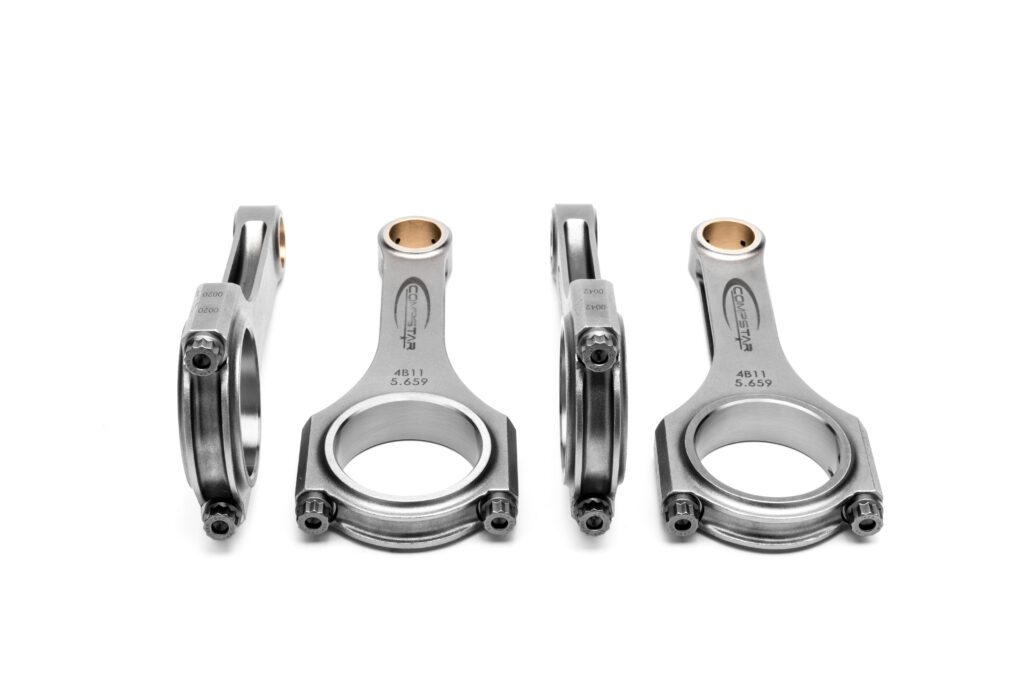
Common connecting rods use either an I-beam or H-beam design, and are made with different materials including cast steel, forged steel, aluminum and titanium. And while there’s enough information on connecting rods to fry your brain, most racers simply ask, what rods offer the best power and durability for the price?
One challenge is finding a balance between weight, strength, cost, and fitment. Light weight means quicker engine acceleration, but obviously we need strength for durability. By fitment, we mean will the rods need to physically swing in the confines of the crankcase without hitting the pan rail, main caps, or windage tray.
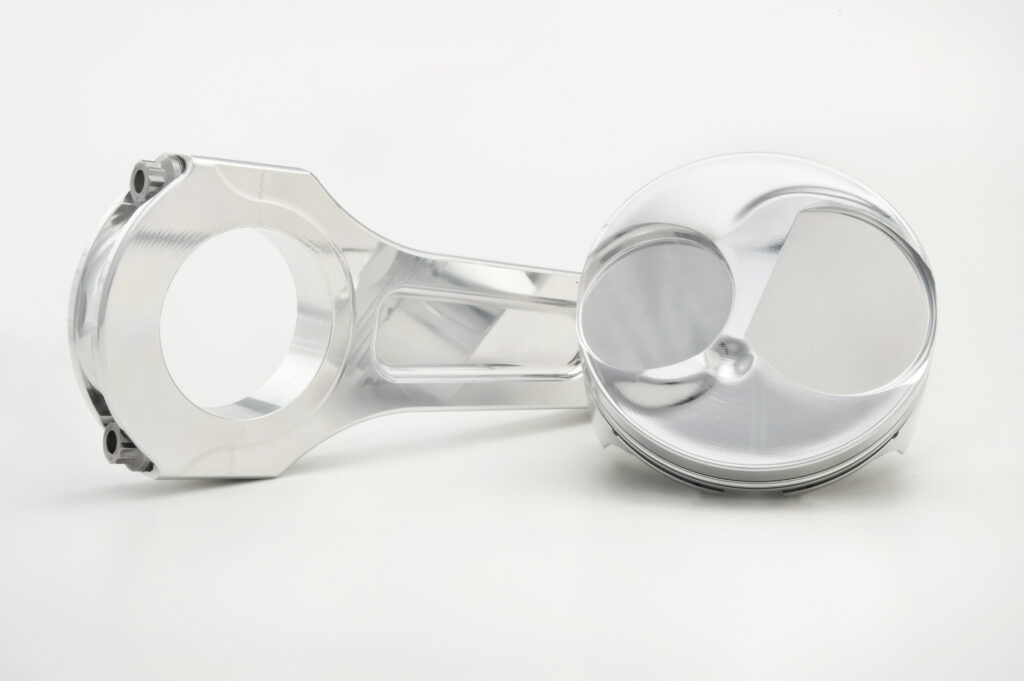
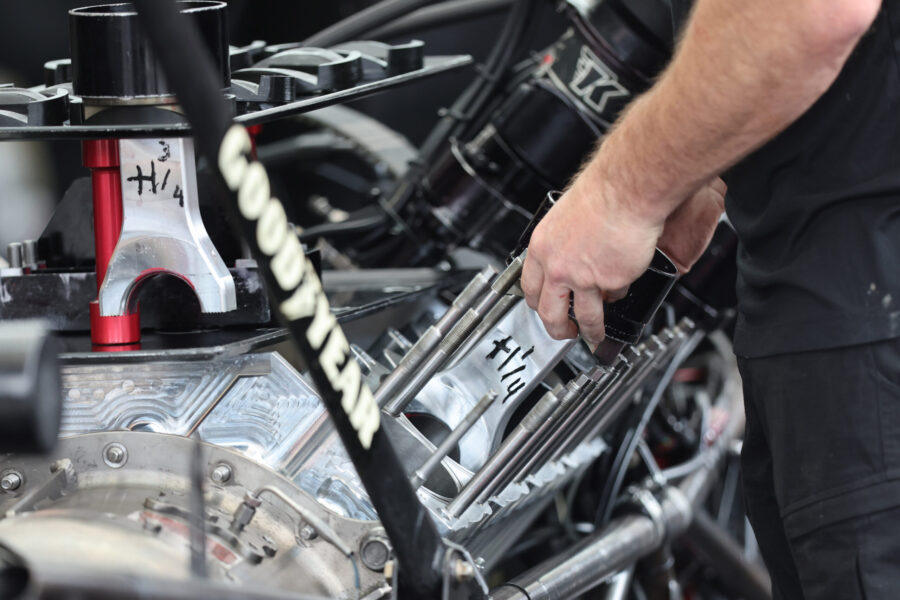
In some situations, like the case of a Top Fuel nitro engine, there isn’t much choice in terms of design and material. Those engines use beefy aluminum rods capable of handling the insane power that can reach 1,250+ horsepower per cylinder!
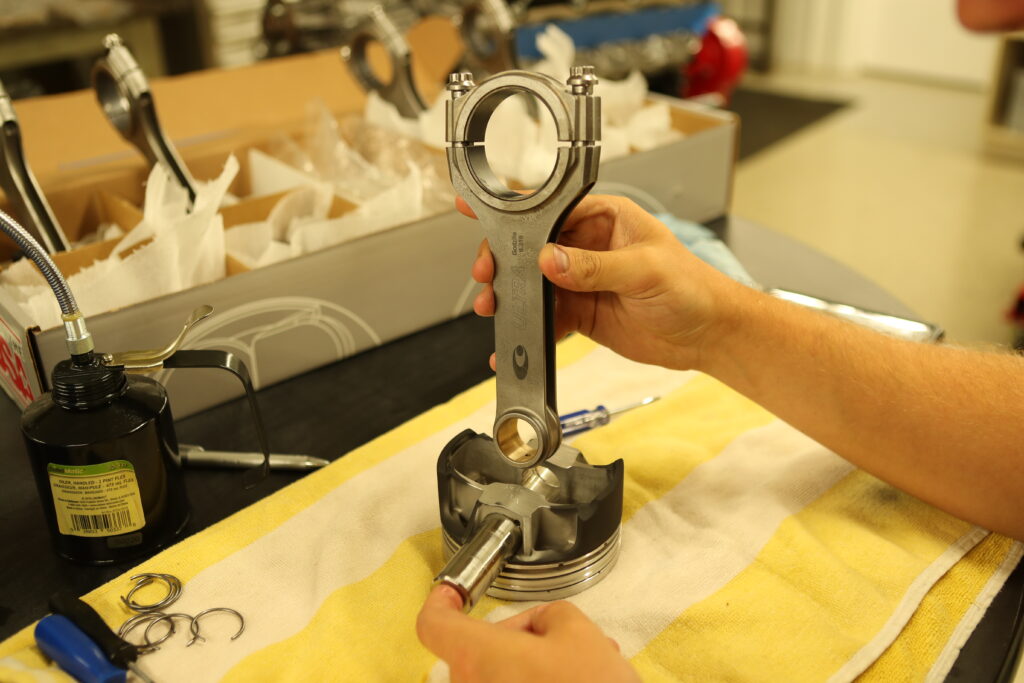
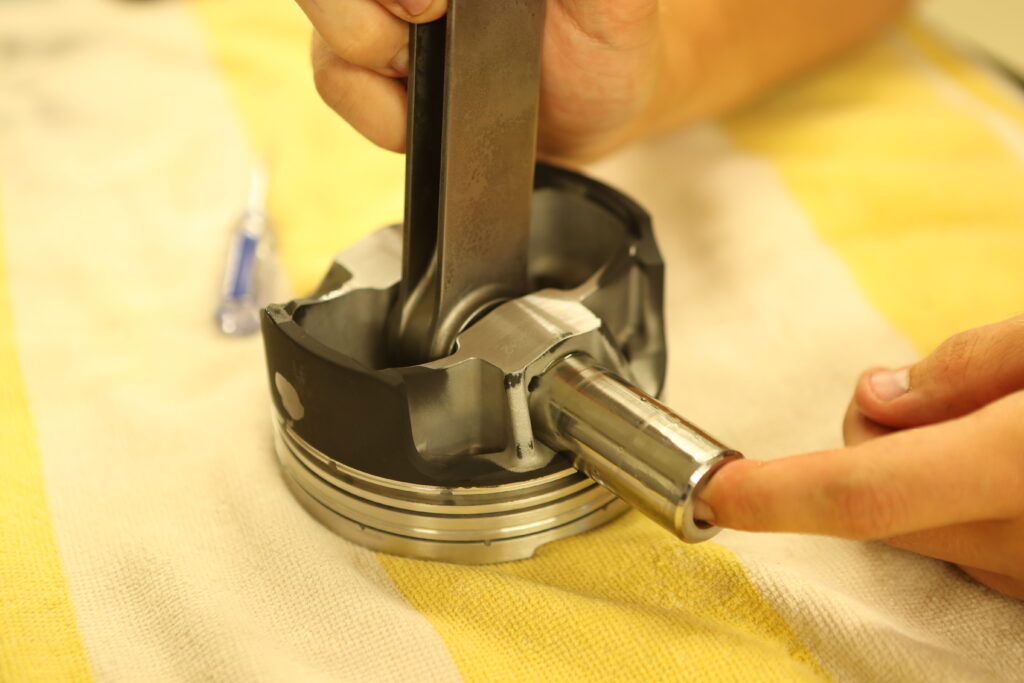
As you’re probably aware, the job of the connecting rod is to link the piston to the crankshaft, meanwhile, allowing the downward force applied to the piston to rotate the crankshaft in a fluid motion that seamlessly converts the force applied to the pistons into a continuous flow of power to the wheels.
To dig deeper into connecting rods we contacted industry experts. We started with Kirk Peters of Howards Racing Components who we asked, what traits do professional engine builders look for when selecting connecting rods?
“In today’s marketplace engine builders have to balance price with strength and performance,” Peters said. “That’s why Howards Racing Components offers both performance and high-performance connecting rods; i.e. our ‘Track Smart’ and our ‘Ultimate Duty’ Series.
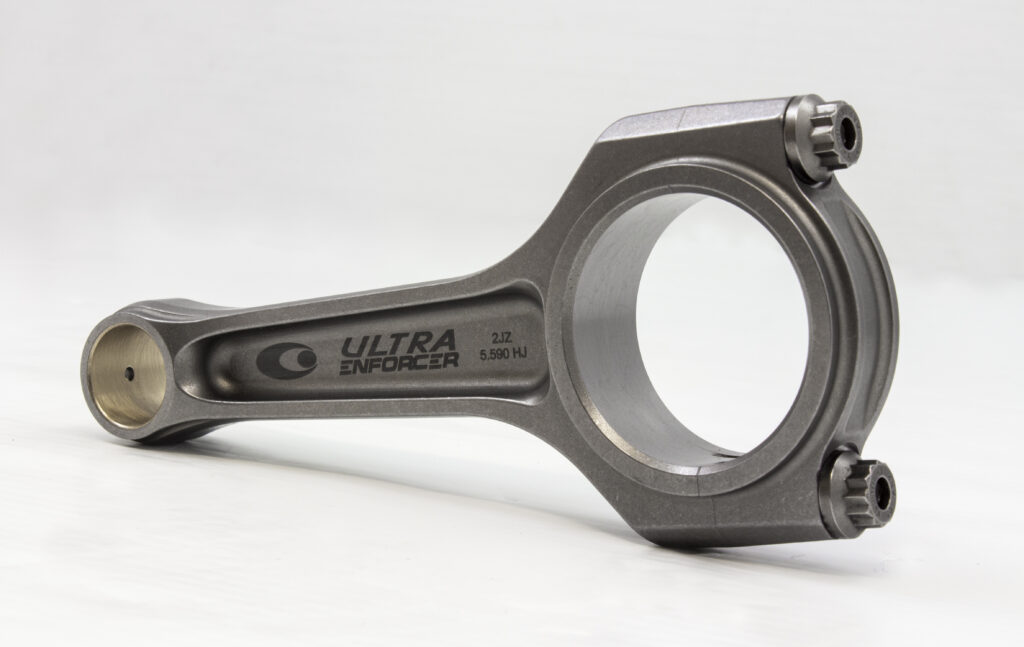
“Many stock-style connecting rods are a I-beam, which describes the beam of the connecting rod. Imagine the rod sitting on its side and if you cut the beam of the rod it would look like an ‘I’. The ‘H’ beam rod starts life as a solid beam and the sides of the rod are milled out, so laid flat and cut in half it would look like an ‘H’ on its side. Howards Ultimate Duty Series Rods are forged billet I-beam rods for high horsepower applications that place a big demand on the connecting rods. In any case, weight and clearances are the biggest challenge. It’s easy to beef up a rod to make it stronger, but then it becomes heavier and the clearances to other parts; i.e. the block, pistons and camshaft can easily be compromised,” he added.
Nick Norris, Product Design Engineer at Callies Performance stated, “Beyond being dimensionally correct, I think engine builders like to see attention to detail. There’s a level of comfort in taking a part out of the box and noticing things like consistent edge breaks around the big end bore, well-rounded contours, and a smooth overall surface finish. Having a lot of the detail work done right out of the box is a good value for the end user. If it’s a platform that we’re not familiar with, it’s important to get proper feedback from engine builders who are experienced with that application. We like to discover what problems need to be solved for best fitment within the block and clearance relative to other components in the system. That’s critical to a successful new part launch.
“The majority of the rods Callies makes in house are forged from Timken 4330 material. We do make some lightweight, high-end rods that are forged from Carpenter Premomet material. This material requires a very specific heat treat process to reach the target hardness of 56 HRc. Due to this hardness spec, much more robust tooling is required for many of the machining operations.”
Next, we spoke to PBM Performance Products’ Lance Stillwell. “Typically, you will consider an aluminum rod in a heavy boost or nitrous application because the aluminum material acts like a shock absorber between the piston and the bearing. If you were to use a steel connecting rod under these conditions, it would simply hammer the bearing out of the connecting rod. But understand, the service life goes down with aluminum rods; typically an engine builder will set a service life on an aluminum rod, and during rebuilds, verify that the aluminum rod has not stretched beyond spec.”
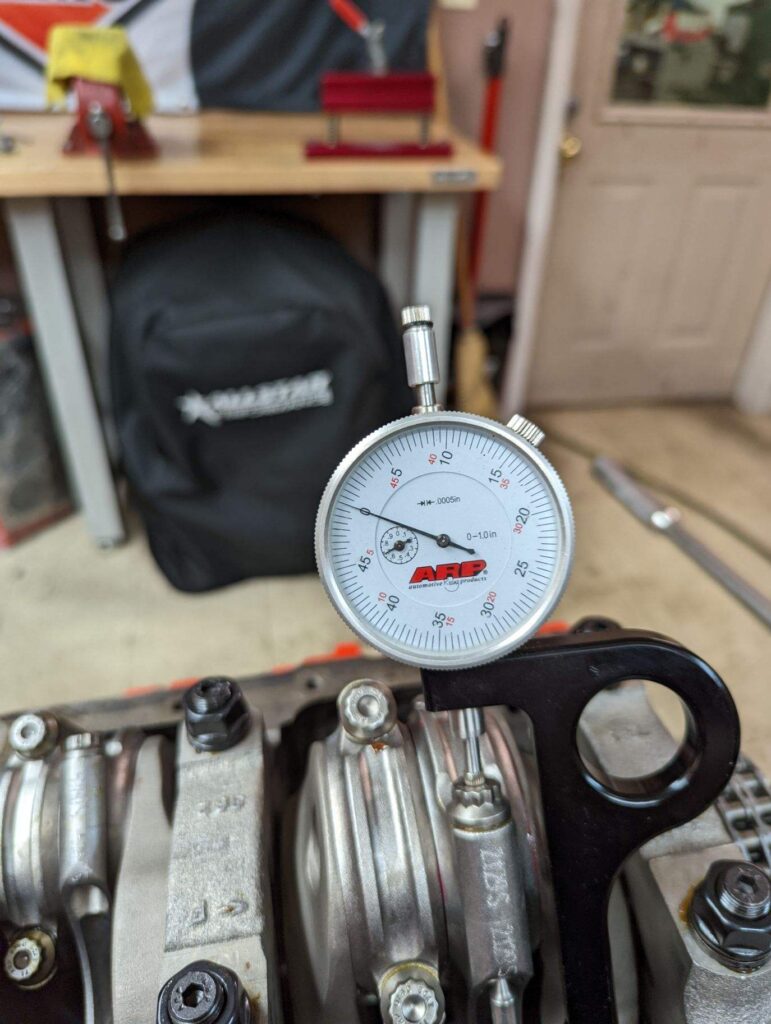
He continued, “On the topic of rod failures, Stillwell said, “This can occur from improper torque or specifically stretch. An example would be using an L19 bolt, which requires a little more stretch than an ARP8740 or even on a ARP2000. If a novice builder does not have the proper tools, such as a stretch gauge and just goes solely off the torque reading, he or she may not stretch the bolt to the desired spec. When this occurs it will allow a higher-yield bolt to loosen during operation ever so slightly. At this point it all goes wrong and the rod gets blamed for the failure. Bearing clearance is another area, and even the checking clearance plays a big role in connecting rod life. This is the side clearance between the two rods on a given journal, not enough clearance and the oil can’t get out to allow fresh cool oil in. When this happens typically it will bake the oil and burn the rod up on the big end. Very rarely does a connecting rod fail under compression, typically when something like that happens there is another problem associated with the failure such as hydraulic situation in the cylinder,” he said.
On the same topic, “Engine builders want a ready-to-race products, with no deburring needed, and with clearly laid out installation procedures, perfect fit etc.,” said Richard Batchelor Rod Sales Manager of CP-Carrillo. “Secondly, they would like to not talk about the connecting rod again until it has reached it targeted end of life. Engine builders have many other areas to focus on like engine tune-up, valvetrain optimization, etc., so the connecting rods must reliably transfer the forces from the piston into the crankshaft.
“On rod types, the biggest reasons for H-beam designs had been high torsional stiffness at low weight, while for the I-beam it has been forgeability or optimized machining cost,” said Batchelor. “Nowadays, this area has become much more complex. Oil viscosities drop every year, oil film thicknesses decrease, bearing wear in the small end and big end becomes an important issue on life and friction of the system. Here, I-beams have a significant advantage in terms of uniform contact pressure distribution. To still achieve stiffness targets ‘hybrid’ designs between H- and I-beam become more common. As for construction, high strength steel, titanium and aluminum alloys are most common. CP-Carrillo uses a proprietary steel that is not widely used by our competitors. Other common steels used are 4340 and 300M. Lastly, about weight, connecting rod weight becomes more important with higher rpm. Some engine types, like in flat-plane V8s, are specifically sensitive to connecting rod weights, creating horizontal shake.”
Of course, connecting rod construction and material is very important, too. “The two most common materials are steel and aluminum, but titanium has been used in some very high-end applications,” said Peters of Howard’s. “Our connecting rods are made from Certified high-nickel 4340 Aircraft Quality Steel. And on the topic of aluminum rods, the easiest way to answer this question is to look at two classes that will show the difference; Top Dragster and a Competition Eliminator. Both types of engines can make about the same horsepower; one does it with cubic inches and makes 3-to-4 qualifying runs plus 5 rounds of eliminations against a dial-in with 7,500 to 9,000 maximum rpm, and a billet steel connecting rod is preferred. By contrast, the Comp Eliminator engine make 2-3 qualifying runs and 3-4 elimination runs, and some turn well over 9,000 rpm, and because it’s trying to make max power per cubic inch, most run aluminum rods.”
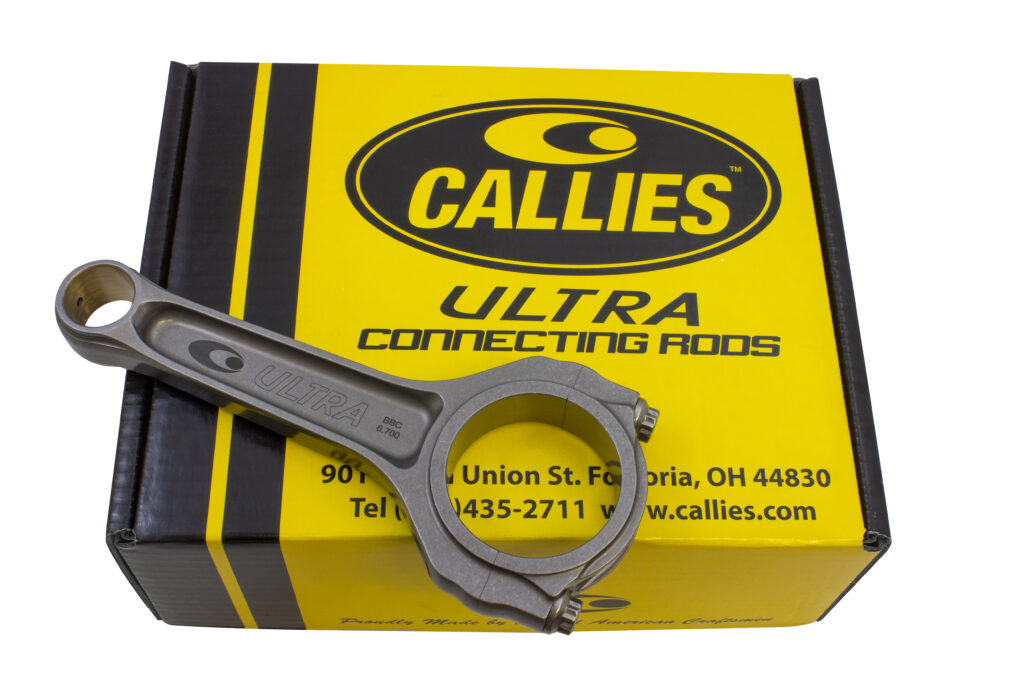
Norris added, “For sure, use aluminum in high-boost applications. Once you get beyond 300 hp per cylinder, an aluminum rod would be strongly recommended. Callies does, however, offer our Ultra Enforcer line of steel rods for boosted applications that work well under this threshold. A long, or unusually heavy steel rod would be another situation where an aluminum rod would be a better fit.”
Peters of HRC stated, “Rods bolts are the most common reason for connecting rod failure. It’s Howard’s position that all high-performance engines should have an upgraded bolt such as an ARP 2000. Also, it is the driver’s responsibility is the do the burnouts and hit the shift points without overevving the engine. The rest is up to the crew chief to make the correct tuning choices.”
Connecting rod weight also plays an important role, as there’s a balance between light weight and durability. Light often means better engine acceleration, but there’s a price to pay. This is where the owner/builder needs to decide what’s most important. “Having the proper weight in a connecting rod is application and budget based,” said Bachelor. “But you also must consider the weight of the other components in the assembly. Rods intended for use with a power adder will typically require more overall mass to combat the high compressive loads and bore deformation associated with boost or nitrous. And rods used with heavy pistons and pins will benefit from extra mass through the beam to reduce the effect of increased tensile loads. Small efficient combustion chambers allow the use of much lighter pistons. This is where a rod with a lighter pin end and tapered beam make sense. Along with that, you’re able to reduce the big end material distribution to where you have an attractive, overall lighter rod weight.”