I just read a post on a Facebook forum where a guy was asking about setting the preload on his hydraulic roller lifters. There were about 35 different answers to his question along with even more opinions on whether to pre-soak the lifters before installing them in the engine. Do you have a procedure that works for setting up hydraulic lifters? And is it different between flat tappet and roller hydraulic lifters? I trust your knowledge more than the internet.
D.P.
There is a simple procedure for setting preload and it is the same for both flat tappet and roller hydraulic lifters. I will use the process from Morel, which is a highly respected lifter manufacturer.
But before we get started, let’s look at how a hydraulic lifter, either flat tappet or roller, functions. There is a small cylinder inside each lifter body with a small piston that travels inside it. The internal piston-to-lifter clearance on hydraulic lifters is very tight and measured in micros, which is one millionth of a meter (0.000039-inch). The total piston travel in the lifter is generally 0.100- to 0.150-inch. The cylinder inside the lifter is fed with pressurized engine oil.
The reason for this design is to compensate for engine changes due to temperature. An engine with iron heads and block will generally grow about 0.007-inch at operating temperature, and an all-aluminum engine will grow twice that or around 0.014-inch. Preloading or pushing the piston down inside the lifter compensates for that engine growth.
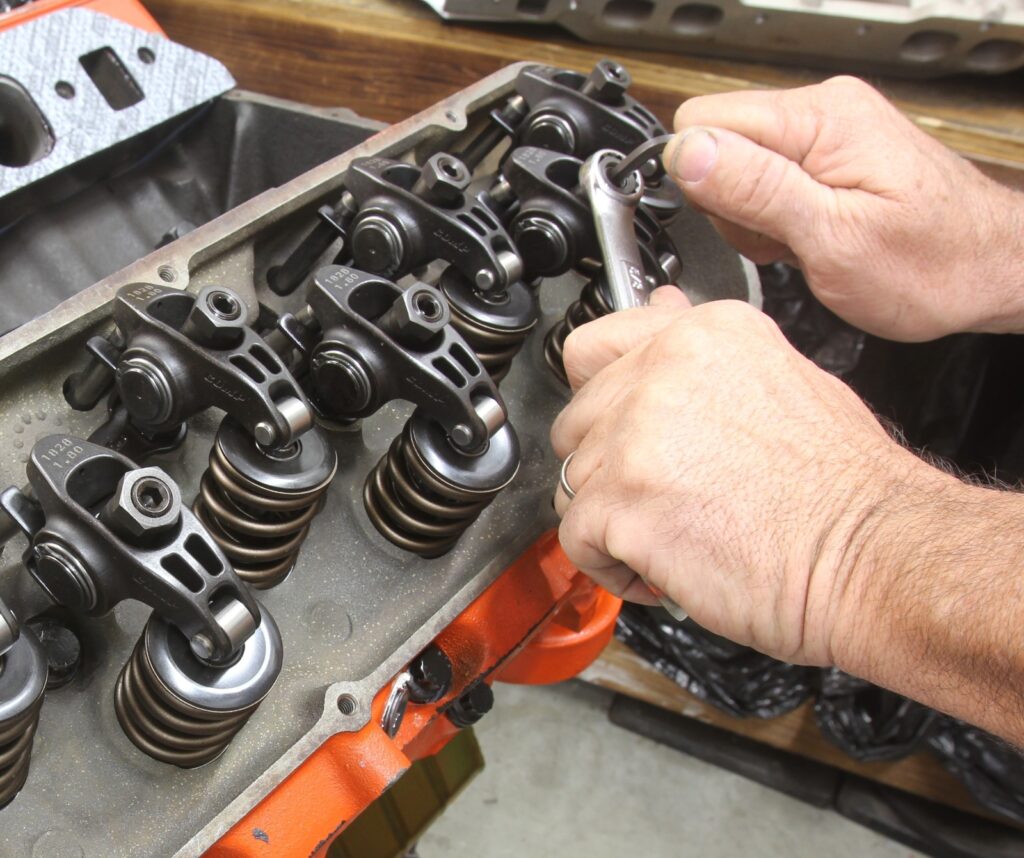
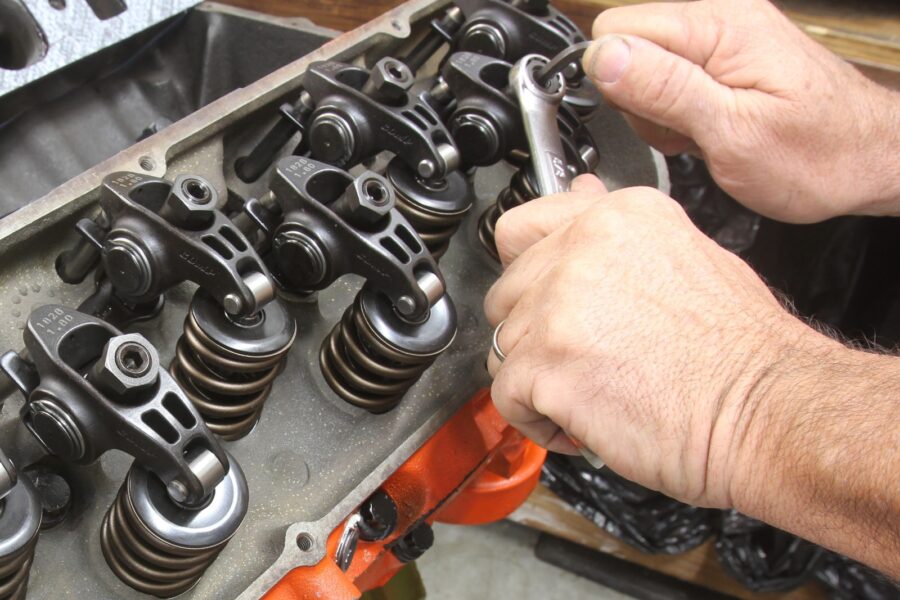
There is considerable disagreement on how much lifter preload is acceptable. We will use a small block Chevy as our example since it offers an adjustable valvetrain with individual rocker studs as opposed to a shaft rocker system.
Rocker stud diameter comes into play here. A 7/16-inch diameter stud with fine threads offers 20 threads per inch. This means one full turn of the rocker arm poly lock will essentially depress the hydraulic lifter piston 0.050-inch. On a 3/8-inch stud with 24 threads per inch, one full turn will depress the lifter 0.41-inch.
The first school is to lightly preload the lifter roughly a quarter-turn. This means a quarter-turn of preload on a 7/16-inch rocker stud will only preload the lifter 0.012-inch, The same quarter-turn with a 3/8-inch stud will preload the lifter 0.010-inch. The idea behind light preload is if the valvetrain loses control and valve float occurs, the lifter piston will only move up 0.010 to 0.012-inch.
The negative side to this argument is that this light preload creates a large cavity of oil under the lifter piston. There is usually a small amount of air trapped in the oil that will compress and reduce valve lift.
The second school of preload, which is the one that Morel suggests, is to adjust the lifter to position the piston in the middle of its roughly 0.100-inch of total travel. Morel suggests preloading the piston between 0.030- and 0.080-inch. For a 7/16-inch stud, this means preloading the lifter 1 or 1 1/4 turns. On a 3/8-inch stud, this will roughly 1 1/8 to 1 1/2 turns.
There is contention that the smaller column of oil underneath the piston with the greater preload will not compress as much, allowing the engine to produce more power since there will be less oil-trapped air inside the lifter cavity. We recently did a back-to-back test on a 450 horsepower small block Chevy with a hydraulic roller cam. We tested with a quarter-turn and one full turn of lifter preload. There was no power difference, but we did notice less preload created quite a bit more valvetrain noise, especially at idle. The engine with greater lifter preload was noticeably quieter at idle.
It’s also not a good idea to soak the lifters in engine oil before assembly because it fills the small lifter cylinder with oil. When you then attempt to set the preload, the oil in the cylinder is not compressible, which means the preload adjustment will merely open the valves against spring pressure instead of preloading the lifter piston. Plus, it will be difficult to rotate the engine over to make sure all the valves see spring pressure to push the oil out of each lifter.
The better approach is to not soak the lifters, but merely coat the lifter and the roller bearings with oil, install them in the engine, and then set the preload. This way you can easily feel when the piston inside the lifter starts to move. This is zero lash and you can set the amount of desired preload from there.
Once that is done, you can then use an engine pre-lube tool to spin the oil pump and pressurize the lifters. This will prevent the lifters from clattering upon startup. Now you have an engine ready to run.